Selecting the perfect TV stand is about more than just aesthetics; it’s a critical decision for your viewing comfort and overall well-being. Have you ever found yourself craning your neck during a movie marathon or constantly adjusting your posture? The culprit might be an improperly sized TV stand. Achieving the correct height for your television can significantly reduce neck and eye strain, transforming your entertainment experience. Beyond ergonomics, the right TV stand seamlessly integrates into your home décor, making your living space both functional and visually appealing. This comprehensive guide will help you navigate the factors involved in choosing the ideal TV stand height for your unique setup, ensuring every viewing session is a pleasure.
What is a TV Stand and Why is Height Crucial?
A TV stand, also known as a media console or entertainment unit, is a piece of furniture designed to support your television and often store associated media devices, cables, and accessories. Its primary function is to elevate your TV to an appropriate viewing level. The height of this stand is paramount because it directly impacts your ergonomic comfort. An incorrectly positioned television can lead to uncomfortable viewing angles, causing persistent neck stiffness, shoulder tension, and eye fatigue during extended periods of watching.
Moreover, the TV stand plays a significant role in the aesthetics of your room. A stand that is too tall can dominate a space and make the TV appear imposing, while one that is too low might feel disconnected from your seating area, disrupting the visual harmony. The right height ensures your television is a focal point that complements your furniture arrangement, creating a balanced and inviting atmosphere. It brings together form and function, preventing strain and enhancing the overall design of your living environment.
Understanding Optimal TV Viewing Height
The cornerstone of comfortable TV viewing lies in one simple principle: the center of your television screen should be at or slightly below your seated eye level. This “golden rule” ensures a natural viewing angle, minimizing the need to tilt your head up or down. For most adults seated on a standard sofa, this typically means the center of the screen should be approximately 40-42 inches (100-107 cm) from the floor. This guideline is a starting point, however, as individual factors can necessitate adjustments.
The science behind this recommendation is rooted in ergonomics. Maintaining a horizontal line of sight to the center of the screen, or a slight downward gaze, prevents undue stress on your cervical spine. Looking upwards for prolonged periods can compress the discs in your neck, leading to discomfort and potential long-term issues. Conversely, looking too far down can cause slouching and strain your upper back. By aligning the screen’s center with your eye level, you promote a relaxed posture, allowing you to enjoy your content without physical strain.
Factors Influencing Your Ideal TV Stand Height
Determining the perfect TV stand height is not a one-size-fits-all endeavor. Several key factors come into play, each contributing to the ultimate comfort and aesthetic appeal of your home entertainment setup. Considering these elements will help you make an informed decision tailored to your specific needs.
TV Size
|
Our Picks for the Best TV Stand in 2026
As an Amazon Associate I earn from qualifying purchases.
|
||
| Num | Product | Action |
|---|---|---|
| 1 | 23 Inch to 50 Inch Floor Small Corner TV Stand with Storage Shelves for Living Room Bedroom, Universal Floor Television Stands with Mount, Rustic Brown Corner TV Table Desk Shelf for Small Space |

|
| 2 | Furologee TV Stand for TVs up to 55 Inch, Entertainment Center with Open Storage Shelves, Media Console Table with Soundbar Shelf for Living Room, Bedroom, Rustic Brown |
|
| 3 | HOOBRO TV Stand with Charging Station to 55 Inches, LED Entertainment Center, Media TV Console Table with Open Storage Shelving for Living Room, Bedroom, Black BB122UDDS01 |
|
| 4 | YGEOMER Entertainment Center for Up to 55 Inch TVs, TV Stand with Power Outlet and Open Storage Shelves, TV Media Console Table for Living Room and Bedroom, Black |
|
| 5 | TV Stand for TVs up to 55", Entertainment Center with 2 Fabric Drawer, Media Console with Shelves, Television Stands for Living Room, Bedroom, Black DS02BB |
|
| 6 | HOOBRO LED TV Stand with Power Outlets to 65 inch TV, Gaming Entertainment Center with Glass Shelves and Large Drawer, Modern Media TV Console Table for Living Room Bedroom, White WT14UDDS01 |
|
| 7 | WALI Floor TV Stand with Power Outlet, Tall TV Stand Mount for 32-75 inch TV up to 110 lbs, Swivel and Height Adjustable TV Stands with Wood Base for Bedroom, Office(TVDVD-7P), Black |
|
| 8 | PERLESMITH Universal Swivel TV Stand for 24-60 inch TVs up to 99 lbs, 12 Height Adjustable Table Top TV Stand, TV Base Stand with Tempered Glass Base, Max VESA 400x400mm, PSTVS33 |
|
| 9 | Furinno Sully 3-Tier Stand for TV up to 40, Espresso/Black |
|
| 10 | HOOBRO TV Stand with Power Outlets to 65 Inches, TV Console Table with Open Storage Shelves, Industrial Media Entertainment Center for Living Room Bedroom, Rustic Brown and Black BF40DS01 |
|
The physical dimensions of your television, particularly its vertical height, are a critical factor. Generally, the larger your TV screen, the shorter your TV stand needs to be to maintain the screen’s center at eye level. For instance, a 75-inch TV is considerably taller than a 40-inch TV. If both were placed on the same height stand, the center of the larger TV would sit much higher, potentially forcing you to look up. Therefore, a larger TV typically requires a lower stand to ensure the middle of the screen remains ergonomically positioned.
Seating Height and Type
Your primary viewing position is perhaps the most significant determinant of TV stand height. Whether you’re watching from a plush low-profile sofa, a standard armchair, or even from a high bed in a bedroom, your seated eye level will vary. For very low seating, a shorter stand is necessary to prevent the TV from appearing too high. Conversely, if you frequently view from a high vantage point, such as bar stools in an open-plan kitchen, a taller TV stand will be more appropriate. Always consider the height of the furniture you’ll be using most often for viewing.
Viewing Distance
The distance between your seating area and the TV also influences the optimal stand height. If you sit closer to the screen, precise alignment with your eye level becomes more crucial to prevent straining your neck and eyes. When viewing from a greater distance, minor deviations from the ideal height may be less noticeable, offering a bit more flexibility. However, for an immersive and comfortable experience, aiming for eye-level viewing remains the best practice regardless of distance.
Room Layout and Aesthetics
The overall layout and design of your room should also guide your TV stand choice. In an open-concept living space, a TV stand might need to be higher to allow visibility from various points, such as a dining area or kitchen island. For compact rooms, a lower, more streamlined stand can help create a sense of spaciousness. Consider how the stand integrates with existing furniture heights and the room’s architectural features, like fireplaces or windows. The goal is to achieve visual balance and complement your interior design.
Additional Considerations
Beyond the main factors, a few other elements can influence your TV stand height. If you plan to place a soundbar directly in front of your TV, ensure there’s enough clearance between the stand’s surface and the bottom of your TV screen. Similarly, if your TV has its own feet or a central pedestal stand, factor in that additional height. Adequate cable management options within the stand can also enhance functionality and keep your entertainment area tidy. Thinking about these details ensures a complete and optimized setup.
How to Calculate Your Perfect TV Stand Height (Step-by-Step Guide)
Finding the ideal TV stand height involves a simple calculation that puts you in control of your viewing comfort. Here’s a step-by-step guide to determine the perfect height for your space:
-
Measure Your Seated Eye Level: Sit comfortably on your primary viewing sofa or chair in your natural viewing position. Have someone measure the distance from the floor to your eye level. Let’s assume this measurement is 42 inches.
-
Determine Your TV’s Actual Screen Height: Measure the actual height of your TV screen (from the top edge to the bottom edge, excluding any built-in stand or feet). For example, a 55-inch TV often has a screen height of approximately 28 inches.
-
Calculate Half Your TV’s Screen Height: Divide your TV’s actual screen height by two. For a 28-inch TV screen, half would be 14 inches. This gives you the distance from the bottom of your TV to its center.
-
Account for Bottom Clearance (Optional but Recommended): If your TV sits on small feet or you plan to place a soundbar on the stand in front of the TV, you’ll need to account for this clearance. This is the space from the top of the stand to the bottom of the visible screen. Let’s assume 2 inches for TV feet or a slim soundbar.
-
Apply the Formula: Use the following calculation to find your ideal TV stand height:
Recommended TV Stand Height = Your Seated Eye Level - (TV Screen Height / 2) - Bottom ClearanceUsing our example:
Recommended TV Stand Height = 42 inches (Eye Level) - 14 inches (Half TV Height) - 2 inches (Bottom Clearance)
Recommended TV Stand Height = 26 inchesIn this scenario, your ideal TV stand height would be around 26 inches. This ensures the center of your TV screen aligns perfectly with your seated eye level, providing an ergonomic and comfortable viewing experience.
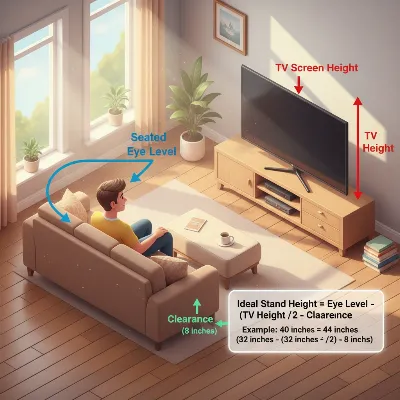 An illustration demonstrating how to calculate optimal TV stand height based on seated eye level and TV screen dimensions.
Common TV Stand Height Categories
While a custom calculation offers the most precise fit, TV stands generally fall into a few common height categories. Understanding these can help you narrow down your options based on your room’s specific needs and aesthetic preferences.
Low-Profile TV Stands (Under 21 inches / 50 cm)
Low-profile TV stands typically measure under 21 inches (approximately 50 cm) in height. These stands are popular in modern and minimalist design schemes, creating a sleek, understated look. They are an excellent choice if your main seating is very low to the ground, such as floor cushions or a low-slung contemporary sofa. Low-profile stands also work well when the television is wall-mounted above the stand, as they provide a base for media devices without making the screen appear excessively high. However, if your seating is standard or high, a low-profile stand might force you to look down, causing neck strain.
Standard Height TV Stands (21-32 inches / 50-80 cm)
The most common range for TV stands, standard height units typically fall between 21 and 32 inches (50-80 cm) tall. This versatile category is ideal for most living rooms with average sofa and armchair heights. A standard height stand usually allows the center of the TV screen to align comfortably with eye level for most seated adults. They offer a good balance of ergonomic viewing and aesthetic integration with typical living room furniture. Many standard stands come with ample storage, making them a practical choice for organizing media components.
Tall TV Stands (Over 32 inches / 80 cm)
Tall TV stands, measuring over 32 inches (approximately 80 cm), are a less common but sometimes necessary option. These stands are best suited for rooms where viewing occurs from higher seating positions. Examples include an open-concept living space where the TV needs to be seen from a kitchen island with bar stools, or in a bedroom where viewing is primarily done from a high mattress. While they can provide necessary elevation, tall stands can sometimes dominate a room visually. It’s crucial to ensure that even with a tall stand, the TV’s center remains at an comfortable eye level for your specific high-seated viewing position to avoid strain.
Comparison of TV Stand Heights
To help you visualize the differences and choose the best fit, here’s a comparison of the common TV stand height categories:
| Feature | Low-Profile TV Stands (Under 21″ / 50 cm) | Standard Height TV Stands (21-32″ / 50-80 cm) | Tall TV Stands (Over 32″ / 80 cm) |
|---|---|---|---|
| Ideal TV Size | Any, often paired with wall-mounted TVs | Most common TV sizes (40-75 inches) | Smaller TVs (32-55 inches), or larger TVs with very high seating |
| Seating Type | Low sofas, floor cushions, wall-mounted TVs | Standard sofas, armchairs | Bar stools, high beds, standing areas |
| Room Style | Modern, minimalist, spacious rooms | Traditional, contemporary, family rooms | Specific layouts requiring height |
| Ergonomics | Good for low seating/wall mounts | Optimal for average seated eye level | Good for high seating |
| Aesthetics | Sleek, unobtrusive, makes room feel larger | Balanced, harmonious with typical furniture | Can dominate a room, may look less balanced with large TVs |
| Storage | Often minimal, or designed for sleek concealment | Ample storage options, versatile configurations | Can offer significant storage, but vertical |
Top Picks: Finding the Right Height for Your TV Stand
While there isn’t a “top pick” in terms of specific products, the best TV stand is ultimately the one that perfectly fits your needs for height, function, and style. The most crucial takeaway is that a custom measurement based on your seated eye level will always yield the most ergonomically sound choice.
When searching for your ideal stand, prioritize flexibility. Adjustable TV stands or those designed to be used in conjunction with a wall mount offer the most control over screen positioning. If you prefer a traditional stand, ensure you’ve done your measurements carefully. Many brands now offer a wide range of heights, materials, and styles, from rustic wood to sleek metal and glass, ensuring you can find a piece that not only supports your TV at the correct height but also enhances your interior design. Remember to consider not just the stand’s height, but also its width and depth to accommodate your TV and media components safely and aesthetically.
> “The greatest mistake in choosing a TV stand is ignoring your own eye level. Your comfort is the most important design element.” – Admin of ReviewPap.com, TV Stand Expert
Maintaining Your TV Stand
Proper care and maintenance will ensure your TV stand remains a functional and attractive part of your living space for years to come. The specific cleaning methods will largely depend on the material of your stand.
- Wood Stands: For solid wood or wood veneer stands, use a soft, damp cloth to wipe away dust and fingerprints. Avoid abrasive cleaners or excessive moisture, which can damage the finish. A wood-specific furniture polish can be used periodically to maintain its luster.
- Metal Stands: Metal stands can be cleaned with a soft cloth and a mild all-purpose cleaner. Ensure you dry them thoroughly to prevent water spots or rust, especially on chrome or brushed finishes.
- Glass Stands: Glass components should be cleaned with a glass cleaner and a microfiber cloth to prevent streaks. Be cautious around the edges of glass shelves, as they can be vulnerable to chipping.
- Laminated/MDF Stands: These can typically be cleaned with a damp cloth and a gentle cleaner. Avoid harsh chemicals that might strip the laminate.
Beyond cleaning, regularly check that all connections, such as screws and bolts, are secure to maintain the stand’s stability and safety, particularly if it carries a heavy television or many devices. Keep the area around the stand free of excessive dust, which can affect electronics. Avoid placing hot items directly on the stand’s surface without protection, and try to keep direct sunlight off wood finishes to prevent fading.
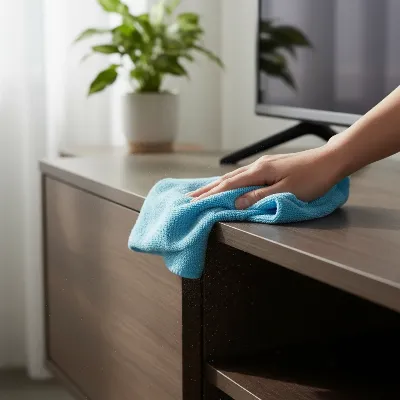 A person gently cleaning a modern wooden TV stand with a soft cloth, showcasing proper maintenance for longevity.
Conclusion
Choosing the right TV stand height is a pivotal decision for creating a comfortable, ergonomic, and aesthetically pleasing entertainment area in your home. By adhering to the golden rule of aligning the center of your screen with your seated eye level and considering factors such as your TV’s size, seating type, and viewing distance, you can significantly enhance your viewing experience and prevent common strains. Whether you opt for a low-profile, standard, or tall stand, a thoughtful approach to measurement and selection ensures your TV becomes a harmonious centerpiece rather than a source of discomfort. Remember, personal preference plays a vital role, but always prioritize ergonomics for long-term enjoyment. What small adjustment could you make today to improve your TV viewing comfort?
Frequently Asked Questions
Is a 30-inch TV stand too high?
A 30-inch TV stand can be appropriate depending on your specific setup. It is generally considered a standard height. However, whether it’s “too high” depends on your seating height and the size of your TV. For taller sofas or if you have a smaller TV, a 30-inch stand might be perfect, keeping the screen center at eye level. For very low seating or a very large TV, it might be too tall, requiring you to look upwards. Always perform the personalized calculation to be sure.
What height TV stand for a 65-inch TV?
For a 65-inch TV, which is quite large, you generally need a lower TV stand to keep the center of the screen at eye level. The actual screen height of a 65-inch TV is typically around 32-34 inches. If your seated eye level is 42 inches, you might need a stand in the range of 25-27 inches to position the center of the screen optimally. Remember to calculate based on your exact TV height and seated eye level.
Should the bottom of the TV be at eye level?
No, the bottom of the TV should not typically be at eye level. The ergonomic recommendation is for the center of the TV screen to be at or slightly below your seated eye level. If the bottom of the TV is at eye level, the top half of the screen would be significantly above your line of sight, forcing you to constantly look upwards and leading to neck strain.
Does viewing distance affect TV stand height?
Yes, viewing distance can affect how precisely you need to adhere to the optimal TV stand height. If you are sitting very close to the television, precise alignment of the screen’s center with your eye level is more critical to avoid discomfort. At greater viewing distances, minor deviations from the ideal height may be less noticeable, offering a bit more flexibility in your stand choice. However, the core principle of eye-level viewing remains paramount for overall comfort.
