Building a DIY TV stand on a tight budget in 2026 is an achievable and rewarding project, allowing you to create a custom entertainment hub for a fraction of the cost of retail furniture. This guide focuses on leveraging smart material choices and beginner-friendly techniques to construct a sturdy and attractive TV stand that perfectly complements your space. You can expect to spend under $100 for materials if you utilize reclaimed wood or inexpensive lumber like pine, and many designs require only basic tools such as a drill and a saw.
What is a TV Stand and Why Do You Need It?
A TV stand, often interchangeably called a media console or entertainment center, is a piece of furniture designed to hold your television and organize associated electronic components, such as soundbars, gaming consoles, and streaming devices. It typically features a flat top surface for the TV, with shelves, cabinets, or drawers below for storage. Far more than just a place to set your television, a well-chosen TV stand elevates the aesthetic of your living space and provides crucial functionality.
In modern homes, a TV stand plays a pivotal role in creating a cohesive and clutter-free entertainment area. Beyond merely supporting the television, it offers practical storage solutions for media accessories, helps conceal unsightly cables, and can significantly enhance the overall decor of a room. Opting for a DIY TV stand provides the unique benefit of customizing every aspect to fit your precise needs and style, ensuring a perfect match for both your TV and your home’s interior design without the hefty price tag of retail furniture.
Popular Types of DIY TV Stands for Every Home
When embarking on a DIY TV stand project, understanding the different types available can help you choose a design that best suits your space, skill level, and budget. Each style offers distinct advantages and can be adapted using cost-effective materials.
Wall-Mounted DIY TV Stands
Wall-mounted TV stands create a sleek, minimalist look by attaching directly to the wall, leaving the floor space clear. This type is excellent for smaller rooms where floor space is at a premium, offering a modern, floating aesthetic. While the TV itself is often wall-mounted separately, the stand provides integrated storage below, appearing to float effortlessly. This design requires careful planning for weight distribution and secure mounting to wall studs.
Freestanding DIY TV Stands
Freestanding TV stands are the most common and versatile type, resting directly on the floor and offering mobility. They range from simple console tables to elaborate multi-shelf units. This type is ideal for those who prefer flexibility in their room layout or rent their homes, as it doesn’t require permanent wall alterations. Freestanding designs are often the easiest for DIY beginners to tackle, using materials like plywood, pine, or even repurposed furniture.
Combination Shelf DIY TV Stands
|
Our Picks for the Best TV Stand in 2026
As an Amazon Associate I earn from qualifying purchases.
|
||
| Num | Product | Action |
|---|---|---|
| 1 | YGEOMER Entertainment Center for Up to 55 Inch TVs, TV Stand with Power Outlet and Open Storage Shelves, TV Media Console Table for Living Room and Bedroom, Black |

|
| 2 | HOOBRO TV Stand with Charging Station to 55 Inches, LED Entertainment Center, Media TV Console Table with Open Storage Shelving for Living Room, Bedroom, Black BB122UDDS01 |
|
| 3 | TV Stand for TVs up to 55", Entertainment Center with 2 Fabric Drawer, Media Console with Shelves, Television Stands for Living Room, Bedroom, Black DS02BB |
|
| 4 | Furinno Sully 3-Tier Stand for TV up to 40, Espresso/Black |
|
| 5 | PERLESMITH Universal Swivel TV Stand for 24-60 inch TVs up to 99 lbs, 12 Height Adjustable Table Top TV Stand, TV Base Stand with Tempered Glass Base, Max VESA 400x400mm, PSTVS33 |
|
| 6 | HOOBRO LED TV Stand with Power Outlets to 65 inch TV, Gaming Entertainment Center with Glass Shelves and Large Drawer, Modern Media TV Console Table for Living Room Bedroom, White WT14UDDS01 |
|
| 7 | Furologee TV Stand for TVs up to 55 Inch, Entertainment Center with Open Storage Shelves, Media Console Table with Soundbar Shelf for Living Room, Bedroom, Rustic Brown |
|
| 8 | HOOBRO TV Stand with Power Outlets to 65 Inches, TV Console Table with Open Storage Shelves, Industrial Media Entertainment Center for Living Room Bedroom, Rustic Brown and Black BF40DS01 |
|
| 9 | 23 Inch to 50 Inch Floor Small Corner TV Stand with Storage Shelves for Living Room Bedroom, Universal Floor Television Stands with Mount, Rustic Brown Corner TV Table Desk Shelf for Small Space |
|
| 10 | WALI Floor TV Stand with Power Outlet, Tall TV Stand Mount for 32-75 inch TV up to 110 lbs, Swivel and Height Adjustable TV Stands with Wood Base for Bedroom, Office(TVDVD-7P), Black |
|
Combination shelf TV stands integrate multiple open shelves, sometimes alongside closed cabinets or drawers, to provide extensive storage and display opportunities. These stands are perfect for organizing a large collection of media, books, or decorative items, creating a more dynamic and functional entertainment unit. DIY versions often utilize materials like MDF or basic lumber, allowing for highly customizable shelf configurations to accommodate various items.
Corner DIY TV Stands
Corner TV stands are specifically designed to fit snugly into the corner of a room, maximizing often-underutilized space. Their triangular or angled design helps to optimize room layout, making them particularly suitable for smaller or irregularly shaped rooms. Building a corner TV stand DIY can be a clever way to save space while still providing ample surface area for your television and media components, often achieved with custom-cut plywood or repurposed corner shelves.
Comparing DIY TV Stand Options
Choosing the right DIY TV stand involves weighing several factors, from the complexity of the build to the aesthetic outcome. Here’s a comparison to help guide your decision:
| Feature | Wall-Mounted DIY Stand | Freestanding DIY Stand | Combination Shelf DIY Stand | Corner DIY Stand |
|---|---|---|---|---|
| Complexity | Moderate to High (requires secure wall mounting & precision) | Low to Moderate (basic carpentry skills) | Moderate (multiple sections, potentially doors) | Moderate (angled cuts, precise fitting) |
| Cost (Materials) | Low to Moderate (plywood, floating brackets, hardware) | Low (pine boards, pallets, MDF) | Moderate (plywood, MDF, hardware for doors/drawers) | Low (plywood, repurposed corner units) |
| Aesthetics | Modern, minimalist, clean, spacious | Traditional, rustic, versatile | Functional, organized, customizable | Space-saving, efficient, cozy |
| Stability | Highly stable if correctly mounted | Good, depends on construction | Good, typically wide base | Good, leverages wall support |
| Best For | Small rooms, modern decor, hiding wires | Beginners, renters, flexible layouts | Media enthusiasts, large storage needs | Small/awkward rooms, maximizing space |
| Key Materials | Plywood, strong wall anchors/brackets | Pine, pallet wood, MDF | Plywood, MDF, cheap lumber, hardware | Plywood, MDF, reclaimed wood |
Essential Factors When Building Your DIY TV Stand
Before you grab your tools, careful planning is paramount for a successful DIY project, especially when building on a budget. Considering these key factors will ensure your TV stand is not only affordable but also functional and aesthetically pleasing.
TV Size and Stand Dimensions
The size of your television is the most critical factor in determining your stand’s dimensions. A good rule of thumb is for the TV stand to be at least as wide as your TV, if not slightly wider, to provide both stability and visual balance. Measure your TV’s width and the width of its base to ensure it sits securely. Consider the optimal viewing height as well; the center of your TV screen should ideally be at eye level when you are seated. This often means a stand height of 18-24 inches, but adjust based on your seating arrangement.
Choosing Budget-Friendly Materials
The materials you select will heavily influence both the cost and the final look of your DIY TV stand. For a tight budget, explore options that offer good value and are easy to work with:
- Plywood or MDF: These engineered wood products are cost-effective, readily available, and provide a stable surface. Plywood offers more strength, while MDF has a smoother finish, ideal for painting. Hardware stores often offer cutting services, saving you from needing a large saw.
- Pine Boards: Inexpensive and easy to cut, pine is a great choice for rustic or farmhouse-style stands. It stains well, allowing you to achieve a desired wood tone.
- Reclaimed Pallet Wood: Free or very low-cost, pallets can be a fantastic source of material for a rustic, industrial, or farmhouse aesthetic. Be sure to source clean, heat-treated (HT stamped) pallets to avoid chemicals.
- Repurposed Furniture: Old dressers, bookshelves, or cabinets can be transformed with minimal effort. A simple paint job, new hardware, or removal of drawers can give them a new life as a TV stand.
- Industrial Pipes: For a modern, industrial look, metal pipes can be combined with wood shelves. These are relatively inexpensive and simple to assemble using threaded fittings.
- Cube Storage Shelves: Modular cube organizers (like those from big-box stores) can be joined and customized with a new top or base to create a long, budget-friendly media console.
Aligning with Your Home Decor Style
Your DIY TV stand should seamlessly integrate with your existing home decor. Consider the prevailing style of your room—be it modern, farmhouse, industrial, minimalist, or traditional.
- Modern/Minimalist: Opt for clean lines, simple shapes, and materials like painted MDF or sleek plywood. Hidden cable management is key.
- Farmhouse/Rustic: Reclaimed wood, distressed finishes, and natural pine are excellent choices. Consider adding barn door sliders for a cozy feel.
- Industrial: Combine metal pipes with raw wood shelves. Exposed fasteners and dark finishes contribute to this look.
- Contemporary: A mix of materials, geometric shapes, and a slightly unconventional approach can work well.
Ensuring Stability and Weight Capacity
The safety of your television and other components depends on the stability and weight capacity of your DIY stand. Always ensure your design is robust enough to support the full weight of your TV and any devices you plan to place on it.
- Sturdy Construction: Use appropriate fasteners (screws, wood glue, pocket-hole screws) and ensure all joints are tight and secure.
- Legs and Base: If freestanding, ensure the legs or base are wide enough to prevent tipping. Add cross-bracing for extra rigidity if needed.
- Wall Anchors: For wall-mounted designs, use heavy-duty wall anchors that are appropriate for your wall type (e.g., toggle bolts for drywall, expansion anchors for masonry) and preferably mount into wall studs.
Smart Storage and Cable Management
A truly functional TV stand goes beyond just holding the TV; it helps keep your entertainment area tidy.
- Storage Solutions: Incorporate shelves, cabinets, or drawers to store remotes, media, gaming accessories, and other items.
- Cable Control: Design your stand with cable management in mind. Drill holes in the back panel or shelves to thread wires through, keeping them out of sight. Cable ties, clips, or sleeves can further organize wires behind the stand. A common strategy is to use a large backboard that is then wall-mounted, allowing cables to be hidden behind the unit.
Your DIY Budget and Tool Kit
Define your budget clearly. Many budget-friendly DIY projects can be completed for under $100 if you utilize reclaimed materials or inexpensive lumber like pine. If you need to purchase tools, factor that into your overall cost.
- Basic Tool Kit: For most DIY TV stands, you’ll need a tape measure, pencil, circular saw (or have wood cut at the store), drill, sander, screws, and wood glue.
- Advanced Tools (Optional): A Kreg Pocket-Hole Jig can make joinery easier and stronger, while a miter saw offers precise angled cuts. However, many simple designs can be achieved with basic hand tools or by asking hardware stores to make cuts for you.
> “The beauty of DIY is not just in the savings, but in the creative freedom to adapt and personalize. Don’t be afraid to combine elements from different designs to create something truly unique that fits your specific needs and budget.” – Liam Chen, DIY Furniture Expert at ReviewPap.com
Top Budget-Friendly DIY TV Stand Designs
Finding inspiration is the first step to building your own TV stand. Here are some of the most popular and affordable DIY designs that you can construct with minimal experience and a tight budget.
1. The Simple Plywood or Pine Box Stand
This classic design is perfect for beginners and highly customizable. It involves cutting plywood or pine boards into panels to form a simple rectangular box with internal shelves.
- Pros: Extremely simple to build, versatile, can be painted or stained to match any decor, offers ample enclosed or open storage.
- Cons: Can look basic if not finished well, requires precise cuts for a clean aesthetic.
- Budget Focus: Plywood or inexpensive pine boards are the main materials. Hardware stores often cut large sheets for a small fee, minimizing the need for specialized tools.
- Key Steps: Cut top, bottom, side panels, and internal shelves. Assemble with wood glue and screws (pocket holes are recommended for a cleaner look). Add a back panel for stability and cable management holes.
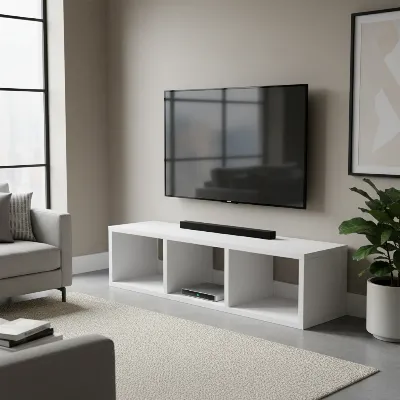 A simple, modern DIY TV stand made from plywood, painted white, with open shelves for media devices and hidden cable management through the back panel.
2. Upcycled Pallet TV Stand
Repurposing wooden pallets is an eco-friendly and extremely budget-conscious way to create a rustic or industrial TV stand.
- Pros: Very low material cost (often free), unique rustic charm, relatively easy to assemble.
- Cons: Pallets need to be cleaned, sanded, and sometimes disassembled; quality can vary.
- Budget Focus: Pallets can be sourced for free. Hairpin legs (affordable online) or simple wooden blocks can serve as legs.
- Key Steps: Source clean, heat-treated pallets. Disassemble or cut to size. Sand thoroughly to remove splinters. Stack and secure pallet sections to create shelves, or use individual planks to build a frame. Add hairpin legs or caster wheels for mobility.
3. Modular Cube Storage Hack
Transforming inexpensive cube storage units into a custom TV stand is a brilliant budget hack, especially for longer consoles.
- Pros: Super easy assembly (units are pre-built), highly customizable lengths, good storage capacity, very affordable.
- Cons: Requires a finishing touch (like a new top or base) to look high-end, limited in design complexity.
- Budget Focus: Inexpensive cube storage units from big-box retailers. Add a cheap pine board or a piece of plywood as a continuous top for a more finished look.
- Key Steps: Purchase 2-3 cube storage units. Arrange them to your desired length. Secure them together using screws. Add a continuous top piece (plywood, pine) for a seamless surface and an optional kickboard base for a built-in look. Paint or stain the top and base for a cohesive finish.
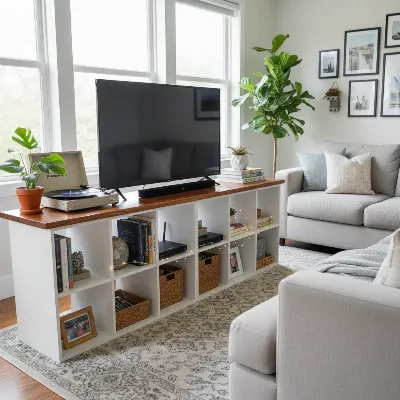 A DIY TV stand created by hacking modular cube storage units, topped with a stained wooden plank and styled with plants and media devices, against a light wall in a cozy living room.
4. Industrial Pipe and Wood Shelf Stand
For a minimalist yet sturdy design, combining metal pipes with wood planks offers an industrial-chic aesthetic.
- Pros: Strong and durable, distinctive industrial look, relatively simple assembly using threaded pipes.
- Cons: Metal pipes can be heavier, precise measurements are crucial for even shelves.
- Budget Focus: Galvanized or black iron pipes are affordable, especially when purchased in common lengths. Reclaimed wood or cheap pine boards work well for shelves.
- Key Steps: Measure and cut wooden planks for shelves. Assemble the pipe framework using threaded pipes, flanges, and elbows to create legs and supports. Secure the wooden shelves to the pipe structure using screws through the flanges.
Maintenance Tips for Your DIY TV Stand
Once you’ve proudly completed your DIY TV stand, proper care and maintenance will ensure its longevity and preserve its aesthetic appeal for years to come.
- Dust Regularly: Use a soft, dry cloth to regularly dust all surfaces. This prevents dust buildup, which can scratch finishes over time.
- Clean Spills Immediately: Wipe up any spills promptly with a damp cloth to prevent staining, especially on wood or painted surfaces. Avoid abrasive cleaners that can damage the finish.
- Wood Care: For wooden stands, periodically apply a wood polish or wax, especially if it’s natural or stained wood, to nourish the material and maintain its luster. Avoid placing hot items directly on wood surfaces; use coasters.
- Painted Surfaces: Clean painted surfaces with a mild soap and water solution if needed, and gently wipe dry. Touch up any chips or scratches with matching paint.
- Metal Components: For industrial pipe stands, wipe metal with a damp cloth and dry thoroughly to prevent rust. If rust appears, address it with a fine-grit sandpaper and a rust-inhibiting paint or sealant.
- Check Fasteners: Every few months, check all screws and joints for tightness. Re-tighten any loose fasteners to ensure the stand remains stable and safe.
- Avoid Overloading: Do not exceed the stand’s weight capacity. Distribute weight evenly across shelves to prevent stress on the structure.
Conclusion
Building a DIY TV stand on a tight budget is an incredibly rewarding project that allows you to infuse your personal style into your home while saving money. By carefully planning, choosing budget-friendly materials like plywood, pine, or reclaimed pallets, and utilizing basic tools, you can create a sturdy, functional, and beautiful entertainment hub. Whether you opt for a minimalist floating design or a rustic freestanding unit, the satisfaction of crafting a piece tailored specifically to your needs is unparalleled. Remember to consider your TV’s dimensions, your home’s decor, and essential features like cable management to ensure a successful build. Why settle for generic store-bought furniture when you can build a unique focal point that truly reflects your creativity and resourcefulness?
What unique design elements will you incorporate into your custom DIY TV stand?
Frequently Asked Questions
What are the cheapest materials for a DIY TV stand?
The cheapest materials for a DIY TV stand often include reclaimed pallet wood (which can be free), inexpensive pine boards, plywood, or MDF. Repurposing old furniture like dressers or cube storage units is also a highly cost-effective approach, minimizing new material purchases.
How do I ensure my DIY TV stand is stable enough for a large TV?
To ensure stability, design your DIY TV stand with a wide base and sturdy joints using screws and wood glue. If freestanding, consider adding cross-bracing. For wall-mounted designs, always anchor securely into wall studs using heavy-duty hardware suitable for your wall type, and check the weight rating of all components.
Can a beginner build a DIY TV stand?
Yes, many DIY TV stand designs are perfect for beginners. Simple box-style stands made from plywood or pine, or hacks using pre-made cube storage units, require only basic tools like a drill and saw (or pre-cut wood from a hardware store) and fundamental woodworking skills.
How can I hide cables on my DIY TV stand?
To hide cables, plan for integrated cable management. Drill holes in the back panel of your stand and shelves to thread wires through. You can also create a false back or use cable ties, clips, and sleeves behind the stand to gather and conceal wires, keeping your entertainment area tidy.
What tools are essential for building a DIY TV stand on a budget?
Essential tools for a budget DIY TV stand include a tape measure, pencil, drill, screwdriver set, and a saw (circular saw or hand saw, or utilize hardware store cutting services). Sandpaper, wood glue, and screws are also crucial for assembly and finishing.
What is the ideal height for a TV stand?
The ideal height for a TV stand generally places the center of your TV screen at eye level when you are seated. For most living rooms, this translates to a stand height between 18 to 24 inches, but it can vary based on your sofa height and personal preference.
Can I repurpose old furniture into a TV stand?
Absolutely! Repurposing old furniture is a fantastic budget-friendly DIY strategy. Old dressers, bookshelves, or even sturdy cabinets can be transformed into unique TV stands with simple modifications like removing drawers, adding new legs, a fresh coat of paint, or updated hardware.
Frequently Asked Questions
What are the cheapest materials for a DIY TV stand?
The cheapest materials for a DIY TV stand often include reclaimed pallet wood, which can be free, along with inexpensive pine boards, plywood, or MDF. Repurposing old furniture like dressers or cube storage units is also a highly cost-effective approach, minimizing new material purchases.
How do I ensure my DIY TV stand is stable enough for a large TV?
To ensure stability, design your DIY TV stand with a wide base and sturdy joints using screws and wood glue. If freestanding, consider adding cross-bracing for extra rigidity. For wall-mounted designs, always anchor securely into wall studs using heavy-duty hardware suitable for your wall type, and check the weight rating of all components.
Can a beginner build a DIY TV stand?
Yes, many DIY TV stand designs are perfect for beginners. Simple box-style stands made from plywood or pine, or hacks using pre-made cube storage units, require only basic tools like a drill and saw (or pre-cut wood from a hardware store) and fundamental woodworking skills.
How can I hide cables on my DIY TV stand?
To hide cables, plan for integrated cable management. Drill holes in the back panel of your stand and shelves to thread wires through. You can also create a false back or use cable ties, clips, and sleeves behind the stand to gather and conceal wires, keeping your entertainment area tidy.
What tools are essential for building a DIY TV stand on a budget?
Essential tools for a budget DIY TV stand include a tape measure, pencil, drill, screwdriver set, and a saw (circular saw or hand saw, or utilize hardware store cutting services). Sandpaper, wood glue, and screws are also crucial for assembly and finishing.
What is the ideal height for a TV stand?
The ideal height for a TV stand generally places the center of your TV screen at eye level when you are seated. For most living rooms, this translates to a stand height between 18 to 24 inches, but it can vary based on your sofa height and personal preference.
Build a Budget-Friendly DIY TV Stand
Learn how to construct a custom TV stand using affordable materials and basic tools, tailored to your home's decor and TV size.
Determine your TV's dimensions and desired stand height (typically 18-24 inches). Choose a budget-friendly material like plywood, pine boards, or reclaimed pallets. Sketch your design, considering storage needs and cable management, and list all necessary tools and hardware.
Measure and cut your chosen materials according to your design plan. If using plywood or MDF, hardware stores often offer cutting services. For pallet wood, clean and sand thoroughly to remove splinters and ensure a smooth finish.
Join the main components of your TV stand using wood glue and screws. For a cleaner look, consider using pocket holes. Ensure all joints are tight and secure to provide maximum stability for your television and media devices.
Install any shelves, cabinets, or drawers as planned. Drill holes in the back panel or shelves to create pathways for cables, keeping them out of sight. Use cable ties or clips to organize wires behind the stand for a tidy entertainment area.
Sand all surfaces smooth, then apply paint, stain, or a protective finish to match your home decor. Regularly dust the stand and promptly clean any spills. Periodically check fasteners for tightness to ensure long-term stability and safety.

I tried out the pine lumber design and it was pretty straightforward. The finished product is solid and definitely an upgrade from my old flimsy stand. My only minor complaint is that getting the cuts perfectly straight with just a hand saw took a bit more effort than I expected. Still, for the price and the custom look, it’s a great project.
I was really intimidated by the idea of building my own furniture, but the instructions for the reclaimed wood design were so clear. I managed to get all my materials for under $80, which is amazing considering how much similar stands cost in stores. It looks fantastic in my living room and holds my 65-inch TV perfectly, plus all my gaming consoles.
This guide was a lifesaver! I’ve been wanting a new media console but didn’t want to spend a fortune. The focus on beginner-friendly techniques made all the difference. I used the design that incorporated shelves for my soundbar and streaming devices, and it’s so much more organized now. Highly recommend for anyone looking to save money and get a custom piece.
I followed the guide for the minimalist design, hoping to keep costs down. While it was easy to assemble with basic tools, I found that the suggested budget of under $100 was a bit optimistic for me. Even with inexpensive lumber, once I factored in screws, wood glue, and a decent stain, I ended up spending closer to $120. It’s functional, but just something to keep in mind.