Revitalizing an old wooden TV stand without sanding is a highly achievable DIY project that offers both creative satisfaction and significant savings. By embracing modern painting techniques and products like chalk paints, mineral paints, or high-quality bonding primers, you can bypass the messy, time-consuming sanding process while still achieving a professional-looking, durable finish. This approach not only breathes new life into outdated furniture but also empowers you to personalize your home decor with confidence and ease.
What is a TV Stand and Why Paint it Without Sanding?
A TV stand is a piece of furniture designed to hold a television, often featuring additional storage for media devices, accessories, and decorative items. It serves both a functional purpose, elevating your TV to an optimal viewing height and organizing electronics, and an aesthetic one, anchoring your entertainment area and contributing to your room’s overall style. Over time, an old wooden TV stand can show signs of wear and tear, from minor scratches and scuffs to outdated finishes that no longer match your decor. Instead of discarding a perfectly functional piece or enduring the laborious task of sanding, painting it without sanding offers a fantastic solution.
The importance of a TV stand in a modern living space cannot be overstated. It helps maintain a clutter-free environment, concealing unsightly wires and providing dedicated spots for gaming consoles, soundbars, and remote controls. From an aesthetic and functional standpoint, painting an old TV stand without sanding delivers several key benefits. It saves a significant amount of time and effort, avoids the dust and mess associated with sanding, and allows you to quickly update its appearance to align with current trends or your personal style. This method is particularly beneficial for pieces with intricate details, veneers, or those made from composite wood, where sanding might be impractical or damaging. The result is a personalized, refreshed piece that looks professionally done, extending its lifespan and enhancing your home’s ambiance. For shop curated tv stands on this site.
Popular No-Sanding Painting Methods for Wooden TV Stands
Achieving a smooth, lasting finish on a wooden TV stand without sanding hinges on selecting the right painting method. Each approach offers unique advantages, catering to different preferences and existing finishes. Understanding these options will help you choose the best strategy for your specific project, ensuring strong adhesion and a beautiful outcome.
Chalk Paint for Effortless Transformations
Chalk paint is arguably the most popular choice for no-sanding furniture makeovers due to its exceptional adherence and characteristic matte finish. Its thick consistency allows it to grip onto various surfaces, including glossy wood, without the need for extensive prep work.
- Pros: Requires virtually no sanding or priming, provides excellent coverage in fewer coats, dries quickly, and is very forgiving for beginners. It also allows for distressed finishes easily.
- Cons: The matte finish often requires a protective topcoat (wax or polycrylic) for durability, especially on a high-traffic item like a TV stand. It can be more expensive than conventional paints.
- Best For: Creating rustic, shabby chic, or vintage looks, and for those who want the quickest, least demanding prep process.
Mineral Paint: Durability Without the Fuss
|
Our Picks for the Best TV Stand in 2026
As an Amazon Associate I earn from qualifying purchases.
|
||
| Num | Product | Action |
|---|---|---|
| 1 | 23 Inch to 50 Inch Floor Small Corner TV Stand with Storage Shelves for Living Room Bedroom, Universal Floor Television Stands with Mount, Rustic Brown Corner TV Table Desk Shelf for Small Space |

|
| 2 | Furologee TV Stand for TVs up to 55 Inch, Entertainment Center with Open Storage Shelves, Media Console Table with Soundbar Shelf for Living Room, Bedroom, Rustic Brown |
|
| 3 | Furinno Sully 3-Tier Stand for TV up to 40, Espresso/Black |
|
| 4 | WALI Floor TV Stand with Power Outlet, Tall TV Stand Mount for 32-75 inch TV up to 110 lbs, Swivel and Height Adjustable TV Stands with Wood Base for Bedroom, Office(TVDVD-7P), Black |
|
| 5 | YGEOMER Entertainment Center for Up to 55 Inch TVs, TV Stand with Power Outlet and Open Storage Shelves, TV Media Console Table for Living Room and Bedroom, Black |
|
| 6 | HOOBRO LED TV Stand with Power Outlets to 65 inch TV, Gaming Entertainment Center with Glass Shelves and Large Drawer, Modern Media TV Console Table for Living Room Bedroom, White WT14UDDS01 |
|
| 7 | HOOBRO TV Stand with Power Outlets to 65 Inches, TV Console Table with Open Storage Shelves, Industrial Media Entertainment Center for Living Room Bedroom, Rustic Brown and Black BF40DS01 |
|
| 8 | HOOBRO TV Stand with Charging Station to 55 Inches, LED Entertainment Center, Media TV Console Table with Open Storage Shelving for Living Room, Bedroom, Black BB122UDDS01 |
|
| 9 | PERLESMITH Universal Swivel TV Stand for 24-60 inch TVs up to 99 lbs, 12 Height Adjustable Table Top TV Stand, TV Base Stand with Tempered Glass Base, Max VESA 400x400mm, PSTVS33 |
|
| 10 | TV Stand for TVs up to 55", Entertainment Center with 2 Fabric Drawer, Media Console with Shelves, Television Stands for Living Room, Bedroom, Black DS02BB |
|
Mineral paint is a robust alternative, highly regarded for its inherent durability and excellent adhesion, often eliminating the need for primer or extensive sanding. It’s formulated to be self-leveling and self-sealing, providing a hard-wearing finish.
- Pros: Offers a built-in topcoat for enhanced durability, comes in various sheens, provides strong adhesion without sanding or priming, and has low VOCs (Volatile Organic Compounds).
- Cons: Can be pricier than other paint types, and while durable, a topcoat is still advisable for very high-use surfaces.
- Best For: Projects requiring a more resilient finish without the extra step of a separate topcoat, suitable for modern or traditional aesthetics.
Milk Paint with a Bonding Agent: A Traditional Twist
Traditional milk paint, made from milk protein (casein), can create a beautiful, aged look. When combined with a bonding agent, it adheres remarkably well to non-porous surfaces without sanding.
- Pros: Creates an authentic, antique finish; environmentally friendly; bonding agent ensures excellent adhesion; results in a unique, sometimes chippy look if desired.
- Cons: Requires mixing the powder paint and bonding agent; without the bonding agent, it will chip significantly on non-porous surfaces; often needs a topcoat.
- Best For: Achieving a truly authentic, aged, or distressed finish, popular for farmhouse or antique-inspired decor.
Using a High-Quality Bonding Primer: The Universal Solution
For any type of latex or acrylic paint, a high-quality bonding primer is your secret weapon for skipping the sander. These primers are formulated to adhere to slick, non-porous surfaces, creating a perfect base for your chosen paint.
- Pros: Allows you to use almost any type of topcoat paint; excellent for stain-blocking and preventing bleed-through from old finishes; ensures superior adhesion for a long-lasting finish.
- Cons: Adds an extra step and drying time to your process; requires careful application to avoid brush marks.
- Best For: When you have a specific paint color or finish in mind that isn’t available in chalk or mineral paint, or when dealing with problematic surfaces prone to bleed-through.
Liquid Sander/Deglosser: The Chemical Shortcut
Liquid sander or deglosser is a chemical solution that roughens the surface of existing finishes, similar to light sanding, but without the dust. It dulls the glossy topcoat, allowing new paint to adhere better.
- Pros: Eliminates dust and physical effort of sanding; also cleans the surface effectively; prepares the surface for primer or direct paint application (check product recommendations).
- Cons: Involves working with chemicals, requiring good ventilation and protective gear; may not be sufficient for severely damaged or extremely glossy surfaces.
- Best For: Lightly scuffing finishes to improve adhesion, especially on pieces that are in relatively good condition but have a shiny topcoat.
> “Choosing the right method for painting without sanding is less about finding a shortcut and more about leveraging modern paint technology. A good bonding primer or specialty furniture paint is designed to do the hard work of adhesion for you, leaving you with a durable, beautiful finish.” – Sarah Chen, DIY Furniture Restoration Expert
Comparing No-Sanding Painting Methods
When deciding how to approach your TV stand makeover, it’s helpful to weigh the pros and cons of each no-sanding method. This table provides a quick comparison to guide your choice, focusing on key aspects like prep time, durability, and cost.
| Feature | Chalk Paint | Mineral Paint | Milk Paint (+ Bonding Agent) | Bonding Primer | Liquid Deglosser |
|---|---|---|---|---|---|
| Prep Time | Very Low | Low | Low | Moderate | Moderate |
| Durability | Moderate (needs topcoat) | High (often self-sealing) | Moderate (needs topcoat) | High (depends on paint) | Moderate (needs primer/paint) |
| Adhesion | Excellent | Excellent | Excellent | Superior | Good |
| Finish | Ultra-matte | Various (matte to satin) | Flat, sometimes chippy | Base for any finish | Base for any finish |
| Cost | Medium to High | High | Medium | Medium | Low |
| Learning Curve | Easy | Easy | Moderate (mixing) | Easy | Easy |
| Best For | Distressed, quick makeovers | Durable, modern looks | Vintage, authentic aging | Versatility, problematic surfaces | Light scuffing, cleaning |
Essential Factors to Consider When Painting an Old Wooden TV Stand Without Sanding
Successfully painting your TV stand without sanding involves more than just picking a paint color. Several critical factors need careful consideration to ensure your project is a success, from proper preparation to choosing the right tools and protection.
Assess the Existing Finish
Before anything else, examine your TV stand’s current finish. Is it a glossy varnish, a dull lacquer, or perhaps an old layer of paint? The type and condition of the existing finish will largely dictate the best no-sanding method. Extremely glossy surfaces benefit most from a deglosser or a robust oil-based bonding primer. If there are deep scratches, chips, or loose veneer, minor repairs with wood filler might still be necessary for a smooth surface, even if sanding is skipped. Ensure the surface is structurally sound before proceeding.
Choose the Right Paint and Primer
As discussed, certain paints are formulated for no-sanding applications.
- Chalk Paint: Ideal for its no-prep adhesion and matte finish. Always follow with a protective topcoat.
- Mineral Paint: A great durable option, often self-sealing, requiring minimal prep.
- Milk Paint (with Bonding Agent): For a traditional, sometimes distressed look.
- Bonding Primer: If using standard latex or acrylic paints, a high-quality bonding primer (like Zinsser B-I-N Shellac-Based Primer or Kilz Adhesion) is non-negotiable. Oil-based primers are often superior for adhesion on slick surfaces. This seals in stains and provides a strong base.
Proper Cleaning and Preparation
Even without sanding, thorough cleaning is paramount. Any dirt, grease, or grime will prevent paint from adhering properly, leading to peeling and chipping down the line.
- Remove Hardware: Take off knobs, hinges, or any other hardware you don’t intend to paint.
- Degrease and Clean: Use a strong cleaner like TSP (Trisodium Phosphate) substitute, a 1:1 vinegar and water solution, or the liquid deglosser product itself. Scrub the entire surface.
- Rinse and Wipe: Wipe down the stand with a clean, damp cloth to remove any cleaner residue.
- Tack Cloth: Once dry, go over the entire surface with a tack cloth or a lint-free cloth to pick up any remaining dust particles. A clean surface is a successfully prepped surface.
Application Tools for a Smooth Finish
The right tools make a significant difference in the final look of your painted TV stand.
- Brushes: High-quality synthetic brushes (for water-based paints) or natural bristle brushes (for oil-based paints) are essential. Choose brushes appropriate for the size of your piece. Foam brushes are excellent for minimizing brush strokes on flat surfaces.
- Rollers: Small foam rollers or flocking rollers can provide a very smooth, almost spray-like finish on larger flat areas.
- Sprayers: For the most professional, brush-stroke-free finish, a paint sprayer is an option, though it requires more setup and cleanup.
- Protective Gear: Always use gloves, eye protection, and work in a well-ventilated area, especially when using primers or deglossers.
The Importance of a Topcoat
A topcoat is crucial for protecting your newly painted TV stand, especially since it’s a frequently used piece of furniture.
- Polycrylic: A water-based, non-yellowing option, ideal for light-colored paints. Dries quickly and cleans up easily with water.
- Polyurethane: More durable than polycrylic, but oil-based versions can yellow over time, making water-based polyurethane a better choice for lighter colors.
- Furniture Wax: Traditionally used with chalk paint for a soft, matte finish. Offers less protection against moisture and scratches than polycrylic or polyurethane, requiring more frequent reapplication.
Apply 2-3 thin coats of your chosen topcoat, allowing proper drying time between each. Lightly scuffing with a fine-grit sanding sponge between coats (and wiping dust) can create an even smoother, more durable finish.
Budget and Time Commitment
While skipping sanding saves time, consider the overall project duration and cost. Specialty paints and primers can be more expensive than standard options. Factor in drying times between coats of primer, paint, and topcoat. A no-sanding project can still take a full weekend or more to complete properly, ensuring each layer cures for maximum durability. Planning your budget and schedule ahead will help manage expectations and ensure a stress-free transformation.
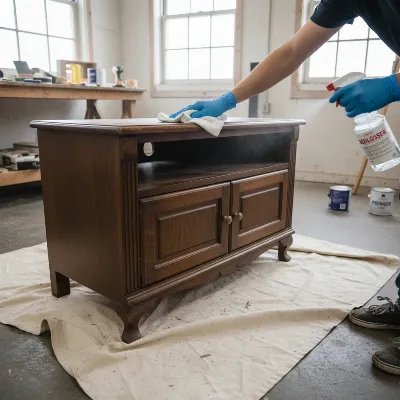 Cleaning an old wooden TV stand without sanding with a deglosser
Essential Tools and Materials for Your No-Sanding TV Stand Painting Project
To ensure a smooth and successful no-sanding TV stand makeover, having the right tools and materials on hand is crucial. This list covers the essentials you’ll need, from preparation to the final protective layers, ensuring you’re well-equipped for the task.
- Protective Gear:
- Rubber gloves
- Safety glasses
- Respirator mask (especially when using oil-based products or deglosser)
- Drop cloths or old sheets to protect your workspace
- Cleaning & Preparation:
- Screwdriver set (to remove hardware)
- Degreaser/Cleaner (e.g., TSP substitute, household degreaser, or 1:1 vinegar/water solution)
- Liquid deglosser/sander (optional, if not using a bonding primer)
- Clean rags or microfiber cloths
- Tack cloth
- Wood filler (for minor repairs, if needed)
- Painter’s tape (to protect areas you don’t want painted)
- Priming & Painting:
- High-quality bonding primer (e.g., Zinsser B-I-N, Kilz Adhesion) – essential for non-specialty paints
- Chalk paint, mineral paint, milk paint with bonding agent, or high-quality interior latex/acrylic paint (if using primer)
- Paint mixing sticks
- Paint tray or container
- High-quality synthetic paint brushes (for water-based paints)
- Small foam rollers or flocking rollers (for smooth surfaces)
- Paint sprayer (optional, for ultra-smooth finish)
- Finishing & Protection:
- Polycrylic or water-based polyurethane (for durable protection)
- Furniture wax (if using chalk paint for a matte finish)
- Fine-grit sanding sponge (optional, for light buffing between topcoat layers)
> “Don’t skimp on the prep, even when skipping sanding. The cleaner and duller your surface is before the first coat, the happier your paint will be. It’s the invisible foundation of a beautiful finish.” – Maria Gonzales, Professional Furniture Restorer
Caring for Your Newly Painted TV Stand
Once your TV stand is beautifully transformed, proper care and maintenance are essential to ensure its longevity and keep it looking pristine for years to come. The way you clean and maintain your TV stand will depend slightly on the type of paint and topcoat you used.
General Care Tips for All Finishes:
- Allow Full Cure Time: While paint may feel dry to the touch in hours, it takes weeks (typically 21-30 days) to fully cure and reach its maximum hardness. During this time, treat your TV stand gently. Avoid placing heavy objects, dragging items across the surface, or vigorous cleaning.
- Avoid Harsh Cleaners: For general dusting, use a soft, dry microfiber cloth. For light cleaning, a slightly damp cloth with mild soap (like dish soap diluted in water) is usually sufficient. Always wipe dry immediately.
- Protect from Moisture: Do not allow liquids to sit on the surface, especially if you used a wax topcoat. Use coasters for drinks and promptly wipe up any spills. Moisture can cause water rings, swelling, or even peel the paint.
- Protect from Heat: Direct heat can damage paint and topcoats. Avoid placing hot electronics or dishes directly on the painted surface without a protective pad.
- Avoid Abrasives: Do not use abrasive cleaners, scouring pads, or harsh chemicals, as these can scratch the finish or strip away the paint and protective layers.
Specific Care for Different Finishes:
- Chalk Paint (Waxed Finish): Wax offers a softer, more pliable finish than polycrylic. It requires reapplication every 6-12 months, depending on use, to maintain its protective qualities. Clean gently with a damp cloth; avoid excessive scrubbing.
- Chalk Paint (Polycrylic/Polyurethane Finish): This combination provides a much more durable, water-resistant surface. Clean as you would a regular painted surface. Reapplication of the clear coat is rarely needed unless the finish is severely damaged.
- Mineral Paint: Often self-sealing and very durable. Clean with a damp cloth. Avoid harsh chemicals as they might break down the self-sealing properties.
- Standard Latex/Acrylic Paint (with Polycrylic/Polyurethane): This offers excellent durability and is very easy to clean. Most household cleaners are safe, but always test in an inconspicuous area first.
> “Regular, gentle cleaning and protecting your painted furniture from common household hazards are the simplest ways to preserve your hard work. Think of it as an ongoing commitment to beauty and longevity.” – David Lee, Furniture Care Specialist
Addressing Minor Wear and Tear:
- Scratches/Scuffs: For minor marks, try rubbing gently with a soft cloth. If the scratch penetrates the topcoat, you may be able to touch it up with a small amount of matching paint or topcoat. For deeper damage, light spot sanding (with fine-grit paper), re-priming, painting, and top-coating the affected area might be necessary.
- Chipping: If the paint chips, it usually indicates an adhesion issue (often due to inadequate prep or cure time). Carefully remove any loose paint, clean the area, feather the edges with a fine-grit sanding sponge, then re-prime, paint, and apply a topcoat.
By following these care instructions, your no-sanding painted TV stand will remain a beautiful and functional part of your home for many years to come, reflecting your unique style and craftsmanship.
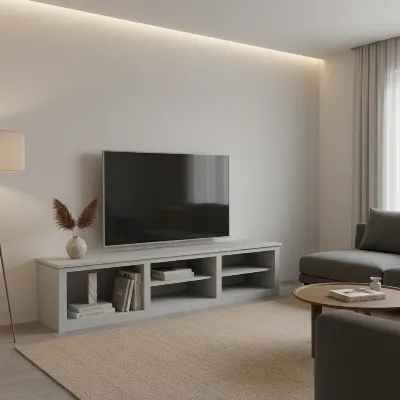 Beautifully painted TV stand in a modern living room setting
Conclusion
Revitalizing an old wooden TV stand without sanding is a remarkably achievable DIY project that offers both creative satisfaction and significant savings. By embracing modern painting techniques and products like chalk paints, mineral paints, or high-quality bonding primers, you can bypass the messy, time-consuming sanding process while still achieving a professional-looking, durable finish. The key lies in thorough cleaning and preparation, selecting the right materials for your desired outcome, and applying thin, even coats, followed by a protective topcoat. This approach not only breathes new life into outdated furniture but also empowers you to personalize your home decor with confidence and ease.
So, are you ready to transform that overlooked piece of furniture into a stylish focal point, proving that a stunning makeover doesn’t always require sanding?
Frequently Asked Questions
Can I really paint any type of wood TV stand without sanding?
While most wooden TV stands can be painted without sanding using the right products, heavily damaged pieces with peeling veneer, deep gouges, or extremely rough surfaces may still benefit from some light sanding or repair to achieve the smoothest finish. However, for most varnished or previously painted wood, specialized primers and paints work wonderfully.
What is the most important step when painting furniture without sanding?
The most critical step is thorough cleaning and preparation. Any dirt, grease, or grime left on the surface will prevent the paint from adhering properly, leading to chipping and peeling. Using a strong degreaser, liquid sander, or even just a vinegar solution, followed by a tack cloth, is essential for a long-lasting finish.
How do I prevent brush marks when painting without sanding?
To minimize brush marks, use high-quality synthetic brushes for water-based paints or foam rollers for large, flat surfaces. Apply thin coats, work quickly to maintain a “wet edge,” and avoid overworking the paint. Letting the paint self-level is key; resist the urge to keep brushing once it’s applied.
Do I need a topcoat if I use a durable paint like mineral paint?
While many mineral paints are formulated to be self-sealing and highly durable, adding a topcoat like polycrylic or water-based polyurethane is always recommended for high-traffic furniture pieces like a TV stand. It provides an extra layer of protection against scratches, moisture, and daily wear, significantly extending the life of your painted finish.
How long does a no-sanding painted TV stand last?
With proper preparation, the right paint and primer, and a durable topcoat, a no-sanding painted TV stand can last just as long as a piece that was sanded. The longevity largely depends on the quality of materials used and how well the piece is cared for over time. Expect many years of beauty and function with good maintenance.
How to Paint a Wooden TV Stand Without Sanding
Transform your old wooden TV stand with a fresh coat of paint without the need for messy sanding. This guide covers essential steps from cleaning to applying a protective topcoat.
Thoroughly clean the TV stand by removing all hardware. Use a strong degreaser like TSP substitute or a 1:1 vinegar and water solution to remove dirt and grime. Rinse with a damp cloth and wipe dry with a tack cloth to ensure a dust-free surface.
If not using specialty paints like chalk or mineral paint, apply a high-quality bonding primer such as Zinsser B-I-N or Kilz Adhesion. This creates a strong base for your chosen paint and helps prevent stains from bleeding through. Allow adequate drying time as per product instructions.
Using high-quality brushes or foam rollers, apply your chosen paint (chalk, mineral, milk paint with bonding agent, or latex/acrylic over primer) in thin, even coats. Avoid overworking the paint to minimize brush marks. Allow each coat to dry completely before applying the next, typically 2-4 hours.
Once the paint is fully dry, apply 2-3 thin coats of a protective topcoat like polycrylic or water-based polyurethane. This step is crucial for durability, especially for a high-traffic item like a TV stand. Allow proper drying time between coats and for the final coat to cure for 21-30 days before heavy use.

This post was exactly what I needed! I had an old entertainment center that was perfectly functional but looked so dated. Using the ‘no-sanding’ techniques mentioned here, I was able to give it a fresh, modern look. It really helped me personalize my home decor without spending a fortune on new furniture. Highly recommend these methods!
I followed the advice for using mineral paint on my TV stand, and while the color is beautiful, I found it a little tricky to get an even coat without any brush marks. Maybe it was just my technique, but it took a few extra coats to look smooth. It’s definitely better than it was, but not quite the ‘professional-looking’ finish I was hoping for. Still, no sanding was a huge plus.
I tried the bonding primer method on my laminate TV stand, and it worked pretty well. The finish is durable, and it definitely saved me a ton of time not having to sand. My only minor complaint is that the primer took a bit longer to fully cure than I expected, so I had to wait an extra day before applying the topcoat. Still, a great result overall.
I was so intimidated by the idea of painting my old, dark wood TV stand, especially because I hate sanding. This guide on using chalk paint without sanding was a lifesaver! It really made the process feel approachable, and my stand looks completely transformed. I’m so happy with how it turned out and it saved me from buying a new one.