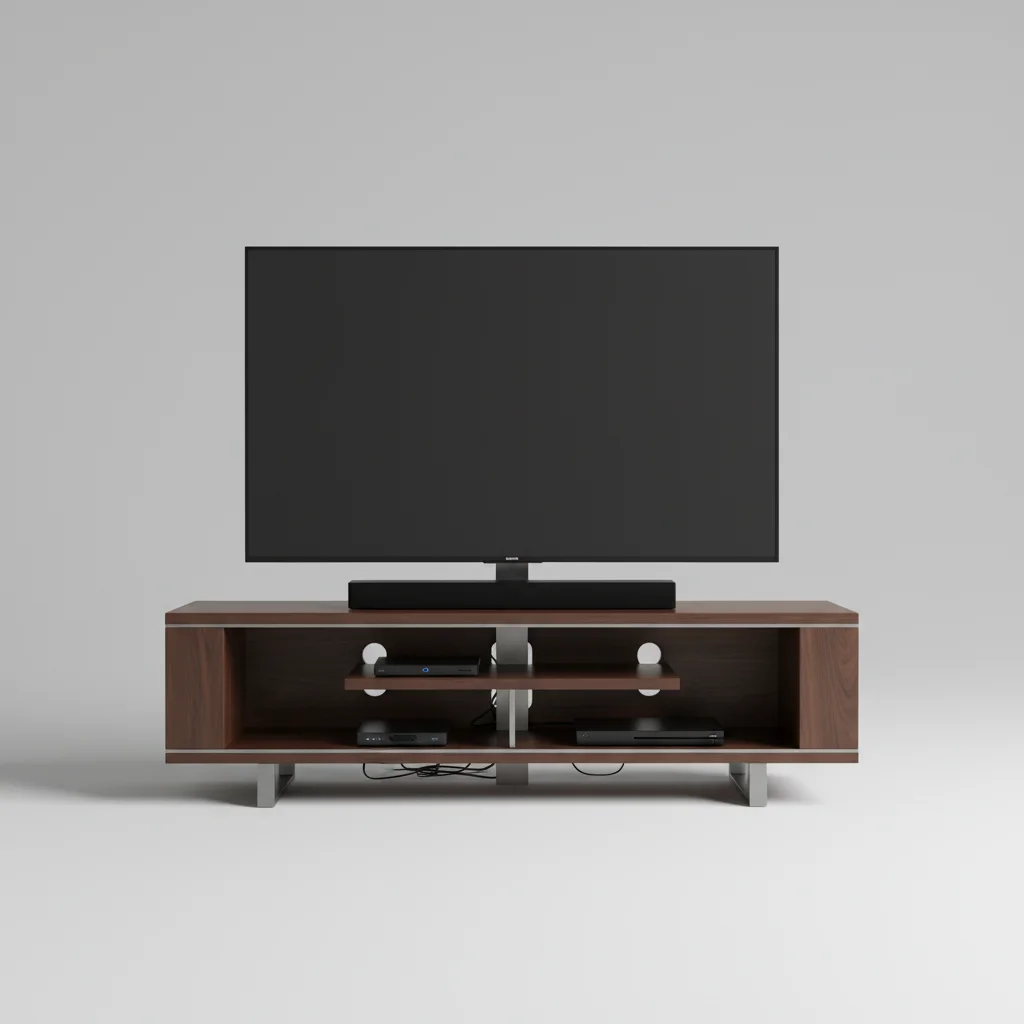
Choosing the right TV stand for your soundbar is crucial for both aesthetics and audio performance. The ideal stand will provide adequate space for your soundbar, ensure proper sound dispersion, and integrate seamlessly with your home entertainment setup. There are three key factors to consider: soundbar dimensions, stand design, and cable management.
Understanding Soundbar Dimensions and Placement
Before selecting a TV stand, accurately measure your soundbar’s width, height, and depth. Most soundbars are designed to sit directly in front of the TV, either on the same surface as the TV or on a dedicated shelf below the TV. Ensure the stand’s shelf or top surface is wide enough to accommodate the soundbar without it overhanging, and deep enough so it doesn’t protrude excessively. The height of the soundbar also matters; it shouldn’t obstruct the TV screen or the TV’s remote sensor.
Consider the placement of your soundbar’s speakers. Some soundbars have upward-firing speakers, which require clear overhead space. Others have side-firing speakers, meaning they need some clearance from the stand’s side panels to project sound effectively. Always check your soundbar’s manual for recommended clearances.
Optimal TV Stand Designs for Soundbars
Several TV stand designs are particularly well-suited for soundbars. Console-style stands with open shelving or a dedicated soundbar shelf are popular choices. These designs allow for good airflow around the soundbar and prevent sound obstruction. Enclosed cabinets with perforated doors can also work, provided the perforations are sufficient for sound to pass through without significant degradation. Avoid fully enclosed cabinets without proper ventilation or sound-transparent materials, as these can muffle the sound and lead to overheating.
Another excellent option is a TV stand with an integrated soundbar shelf. These stands are specifically designed to house a soundbar, often with precise dimensions and cable routing solutions. They offer a clean, integrated look and ensure optimal soundbar positioning.
Cable Management and Aesthetics
|
Our Picks for the Best TV Stand in 2026
As an Amazon Associate I earn from qualifying purchases.
|
||
| Num | Product | Action |
|---|---|---|
| 1 | PERLESMITH Universal Swivel TV Stand for 24-60 inch TVs up to 99 lbs, 12 Height Adjustable Table Top TV Stand, TV Base Stand with Tempered Glass Base, Max VESA 400x400mm, PSTVS33 |

|
| 2 | HOOBRO LED TV Stand with Power Outlets to 65 inch TV, Gaming Entertainment Center with Glass Shelves and Large Drawer, Modern Media TV Console Table for Living Room Bedroom, White WT14UDDS01 |
|
| 3 | Furinno Sully 3-Tier Stand for TV up to 40, Espresso/Black |
|
| 4 | WALI Floor TV Stand with Power Outlet, Tall TV Stand Mount for 32-75 inch TV up to 110 lbs, Swivel and Height Adjustable TV Stands with Wood Base for Bedroom, Office(TVDVD-7P), Black |
|
| 5 | TV Stand for TVs up to 55", Entertainment Center with 2 Fabric Drawer, Media Console with Shelves, Television Stands for Living Room, Bedroom, Black DS02BB |
|
| 6 | 23 Inch to 50 Inch Floor Small Corner TV Stand with Storage Shelves for Living Room Bedroom, Universal Floor Television Stands with Mount, Rustic Brown Corner TV Table Desk Shelf for Small Space |
|
| 7 | YGEOMER Entertainment Center for Up to 55 Inch TVs, TV Stand with Power Outlet and Open Storage Shelves, TV Media Console Table for Living Room and Bedroom, Black |
|
| 8 | Furologee TV Stand for TVs up to 55 Inch, Entertainment Center with Open Storage Shelves, Media Console Table with Soundbar Shelf for Living Room, Bedroom, Rustic Brown |
|
| 9 | HOOBRO TV Stand with Power Outlets to 65 Inches, TV Console Table with Open Storage Shelves, Industrial Media Entertainment Center for Living Room Bedroom, Rustic Brown and Black BF40DS01 |
|
| 10 | HOOBRO TV Stand with Charging Station to 55 Inches, LED Entertainment Center, Media TV Console Table with Open Storage Shelving for Living Room, Bedroom, Black BB122UDDS01 |
|
Effective cable management is vital for a clean and organized entertainment area, especially when incorporating a soundbar. Look for TV stands with built-in cable holes, channels, or a removable back panel. These features help route power cords, HDMI cables, and optical audio cables neatly, preventing a tangled mess. A well-managed cable system not only looks better but also reduces dust accumulation and makes it easier to access connections when needed.
Beyond functionality, consider the aesthetic appeal of the TV stand. It should complement your existing decor and the style of your TV and soundbar. Materials like wood, metal, and glass each offer a distinct look. Modern soundbars often pair well with minimalist or contemporary stands, while more traditional soundbars might suit classic wooden consoles. The overall goal is to create a cohesive and visually pleasing entertainment hub.
Key Considerations for Soundbar Integration
- Soundbar Dimensions: Measure width, height, and depth accurately.
- Speaker Placement: Ensure no obstruction for upward or side-firing speakers.
- Ventilation: Adequate airflow is crucial for soundbar longevity.
- Cable Management: Look for built-in solutions to keep wires tidy.
- Aesthetics: Choose a stand that complements your room’s decor.
By carefully considering these factors, you can select a TV stand that not only supports your television but also enhances your soundbar’s performance and integrates seamlessly into your living space. A well-chosen stand can significantly improve your overall home entertainment experience.

Finally, someone talks about the importance of the soundbar’s height! My previous stand had my soundbar just barely obstructing the bottom of the screen, which was so annoying. Following the advice here, I found a stand where the soundbar sits perfectly without blocking anything. It makes a huge difference to the viewing experience.
I appreciated the emphasis on cable management, as my setup was a total mess before. I tried to apply the tips to my current stand, but it just doesn’t have the right features for hiding all the wires. I’ll probably need to invest in a new stand soon, but at least I know what to look for now. It’s a good starting point for anyone feeling overwhelmed.
This guide helped me realize why my sound was off even with a good soundbar. I hadn’t considered sound dispersion at all! My old stand was too enclosed. I found a new open-shelf design that really improved the audio quality. My only minor complaint is that I wish there were more specific brand recommendations, but the general advice was solid.
I was really struggling to find a TV stand that would properly fit my new soundbar without it looking awkward or blocking the TV. The advice here about measuring the soundbar’s width and depth was super helpful. I ended up getting a stand with a dedicated shelf below the TV, and it looks so much cleaner now. Great tips for anyone upgrading their home theater!