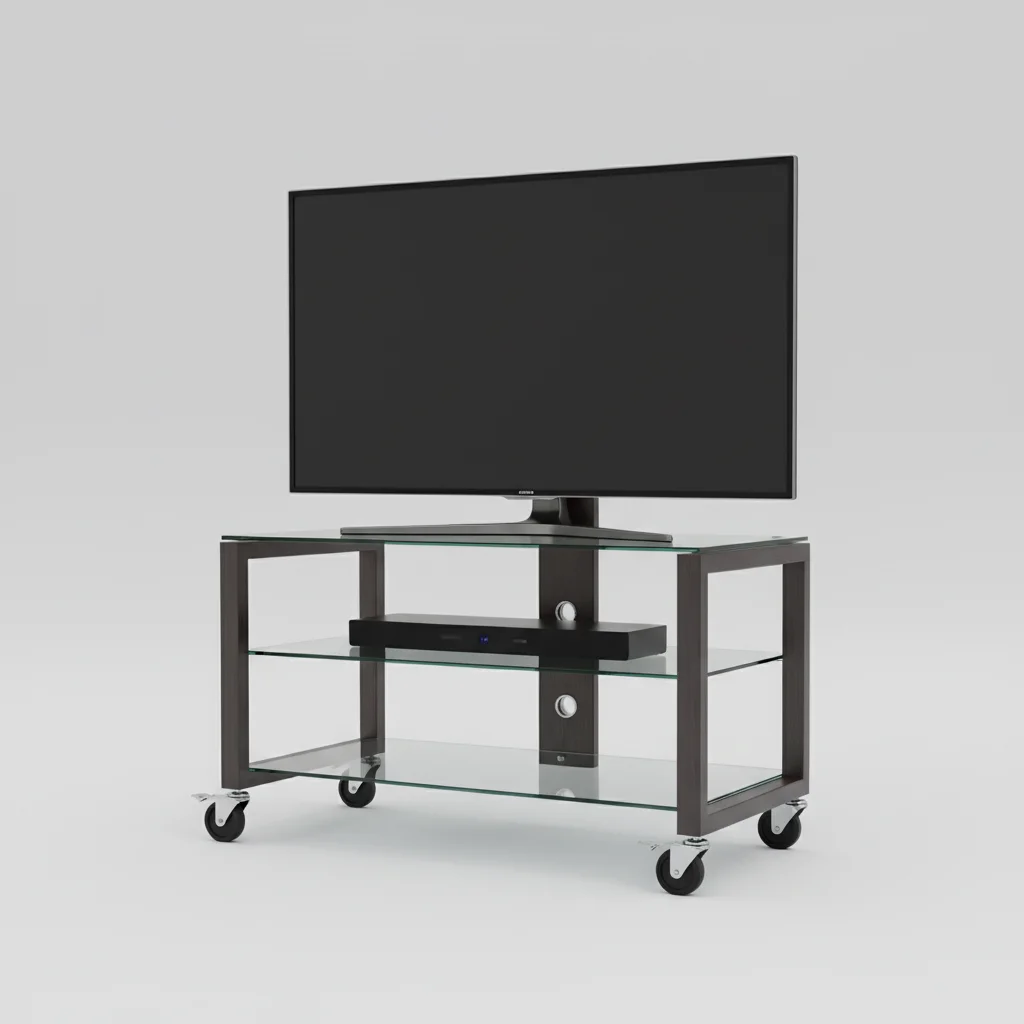
A TV stand with wheels can be an excellent solution for dynamic living spaces, offering unparalleled flexibility and ease of rearrangement. This type of stand is particularly well-suited for open-concept homes, small apartments where furniture needs to be moved frequently, or even for home offices that double as entertainment zones. The primary benefit lies in its mobility, allowing you to effortlessly reposition your television for optimal viewing angles, cleaning, or to simply reconfigure your room layout without heavy lifting. There are typically three main scenarios where a wheeled TV stand truly shines: frequent room reconfigurations, multi-purpose rooms, and the need for easy access to cables and ports.
Why Choose a Mobile TV Stand?
The decision to opt for a TV stand with wheels often comes down to lifestyle and spatial needs. Unlike stationary units, mobile stands provide the freedom to adapt your entertainment setup to various activities or guest arrangements. Imagine hosting a game night and needing to shift the TV closer to the seating area, or moving it to a different wall for a presentation. This adaptability is a significant advantage, especially in modern living where spaces are often designed to serve multiple functions. Furthermore, the ability to easily pull the stand away from the wall makes cleaning behind it a breeze and provides convenient access for connecting new devices or managing cables.
Key Features to Look for in a Wheeled TV Stand
When selecting a TV stand with wheels, several features are crucial for both functionality and durability. First, consider the quality of the casters; they should be robust, smooth-rolling, and ideally include locking mechanisms to secure the stand in place. Larger, rubberized wheels tend to offer better maneuverability and protect floors from scratches. Second, assess the stand’s weight capacity to ensure it can safely support your television and any additional components. A sturdy frame, often made from steel or solid wood, is essential. Third, evaluate the storage options. Many wheeled stands come with shelves, cabinets, or drawers, which are vital for organizing media devices, remote controls, and other accessories. Finally, look for integrated cable management solutions, such as cutouts or channels, to keep wires tidy and prevent tangles.
- Robust, locking casters for stability and easy movement.
- Adequate weight capacity to support your TV and components.
- Durable construction materials like steel or solid wood.
- Sufficient storage options (shelves, cabinets, drawers).
- Effective cable management features to keep wires organized.
Installation and Setup Considerations
|
Our Picks for the Best TV Stand in 2026
As an Amazon Associate I earn from qualifying purchases.
|
||
| Num | Product | Action |
|---|---|---|
| 1 | Furinno Sully 3-Tier Stand for TV up to 40, Espresso/Black |

|
| 2 | Furologee TV Stand for TVs up to 55 Inch, Entertainment Center with Open Storage Shelves, Media Console Table with Soundbar Shelf for Living Room, Bedroom, Rustic Brown |
|
| 3 | HOOBRO LED TV Stand with Power Outlets to 65 inch TV, Gaming Entertainment Center with Glass Shelves and Large Drawer, Modern Media TV Console Table for Living Room Bedroom, White WT14UDDS01 |
|
| 4 | PERLESMITH Universal Swivel TV Stand for 24-60 inch TVs up to 99 lbs, 12 Height Adjustable Table Top TV Stand, TV Base Stand with Tempered Glass Base, Max VESA 400x400mm, PSTVS33 |
|
| 5 | WALI Floor TV Stand with Power Outlet, Tall TV Stand Mount for 32-75 inch TV up to 110 lbs, Swivel and Height Adjustable TV Stands with Wood Base for Bedroom, Office(TVDVD-7P), Black |
|
| 6 | 23 Inch to 50 Inch Floor Small Corner TV Stand with Storage Shelves for Living Room Bedroom, Universal Floor Television Stands with Mount, Rustic Brown Corner TV Table Desk Shelf for Small Space |
|
| 7 | HOOBRO TV Stand with Power Outlets to 65 Inches, TV Console Table with Open Storage Shelves, Industrial Media Entertainment Center for Living Room Bedroom, Rustic Brown and Black BF40DS01 |
|
| 8 | HOOBRO TV Stand with Charging Station to 55 Inches, LED Entertainment Center, Media TV Console Table with Open Storage Shelving for Living Room, Bedroom, Black BB122UDDS01 |
|
| 9 | TV Stand for TVs up to 55", Entertainment Center with 2 Fabric Drawer, Media Console with Shelves, Television Stands for Living Room, Bedroom, Black DS02BB |
|
| 10 | YGEOMER Entertainment Center for Up to 55 Inch TVs, TV Stand with Power Outlet and Open Storage Shelves, TV Media Console Table for Living Room and Bedroom, Black |
|
Setting up a TV stand with wheels is generally straightforward, but there are a few considerations to keep in mind. Most units come with clear assembly instructions, and the process typically involves attaching the wheels to the base and then assembling the main body of the stand. It’s important to ensure all screws and fasteners are tightened securely to prevent wobbling, especially given the stand’s mobile nature. Once assembled, place your TV on the stand, making sure it is centered and stable. Route all cables through any provided management systems to maintain a clean look and prevent tripping hazards. Before loading the stand with all your devices, perform a test roll to ensure the wheels move smoothly and lock effectively.
Maintaining Your Mobile TV Stand
To ensure your TV stand with wheels remains functional and aesthetically pleasing for years, regular maintenance is key. Periodically check the casters for any debris or hair that might impede their movement and clean them as needed. Lubricating the wheel axles with a silicone spray can also help maintain smooth operation. For the stand’s surfaces, follow the manufacturer’s cleaning recommendations based on the material. For wooden stands, a gentle wood cleaner and polish will keep it looking new, while glass or metal surfaces can be wiped down with appropriate cleaners. Regularly inspect all fasteners and tighten them if they become loose, which can happen over time with frequent movement.
When a Wheeled Stand Might Not Be the Best Fit
While TV stands with wheels offer significant advantages, they aren’t the ideal solution for every situation. If you have young children or pets who might push the stand around, a stationary unit might be safer to prevent accidental tipping. Similarly, if your viewing area is fixed and you never anticipate needing to move your television, the added cost and potential for slight instability of a wheeled stand might not be justified. For very large, heavy televisions, ensuring the wheeled stand has an exceptionally high weight capacity and robust locking mechanisms is paramount. In these cases, a wall-mounted TV or a heavy, fixed console might provide greater peace of mind and stability.
